METAR & TAF PAOO
Current METAR
Observed 20:23Z
PAOO 102023Z AUTO 14020KT 6SM BR SCT016 BKN024 OVC039 07/06 A2938 RMK AO2 TSNO PNO $
- Wind
- 140° @ 20 kt
- Visibility
- 6 SM
- Temp / Dew
- 7°C / 6°C
- Altimeter
- 29.38 inHg
- Clouds
- OVC
- Density alt
- -202 ft
- Ceiling
- 2,400 ft AGL
- Rules
- MVFR
Airport info & contacts
Manager on record, flight service, ARTCC, attendance schedule and pattern altitude — published by the FAA and refreshed every 28 days.
Location
- From city
- 1 NM NE
- VFR sectional
- BETHEL
- ARTCC
- ZAN · ANCHORAGE
- NOTAM facility
- OOK (NOTAM-D)
Airport manager
- Name
- JOSEPH LARAUX
- Phone
- 907-543-2498
- Address
- PO BOX 505, BETHEL AK 99559
Flight service · Hours
- FSS ENA
- KENAI907-283-72111-866-864-1737
- Attendance
- Unattended
Frequencies
Tap any row to copy the frequency to your clipboard.
Runways & pattern
Full pagePattern entry · RWY 16
LEFT TRAFFICRunway end performance
| End | TORA | TODA | ASDA | LDA | VGSI | Approach lights | Obstruction |
|---|---|---|---|---|---|---|---|
| 16 | — | — | — | — | PAPI 4-box left(4°) | — | — |
| 34 | — | — | — | — | PAPI 4-box right(3°) | — | — |
Declared distances in feet. TORA = takeoff run available, TODA = takeoff distance, ASDA = accelerate-stop, LDA = landing distance.
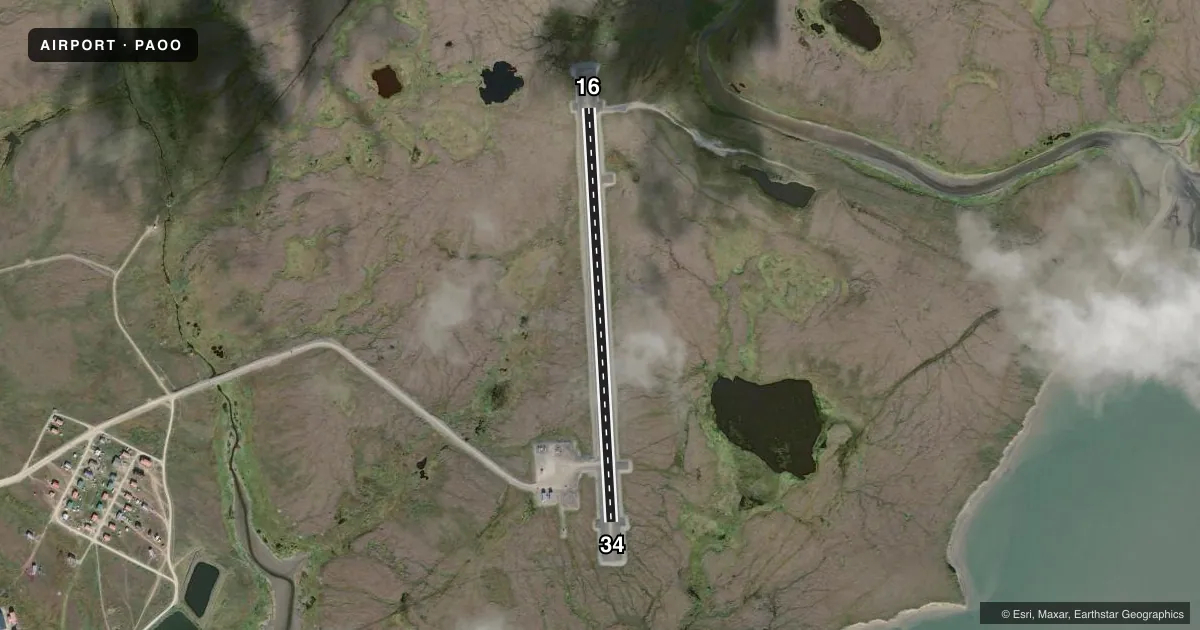
Airport sketch
Runways drawn to scale from FAA survey coordinates, rendered over satellite imagery. Not for navigation.
Approaches & charts
Services on the field
Fuel grades, oxygen, maintenance, ramp storage and lighting — as declared to the FAA by the airport operator.
Fuel & services
- Fuel
- Not available
Ramp & ground
- Transient storage
- Not published
- Landing fee
- No fee published
- Customs
- Not available
- Lighting schedule
- SEE RMK
- Beacon schedule
- SEE RMK
- Beacon
- White / Green (civil land)(WG)
- Wind indicator
- Lighted
- Segmented circle
- Yes
Fuel & FBOs
Cheapest 100LL and Jet A on the field and nearby. Always confirm with the FBO before taxi.
Airport notes
Surface conditions, obstructions, local procedures, lighting outages and other notes published with each FAA cycle.
General notes
- RWY COND UNMNT; RCMND VISUAL INSP PRIOR TO USE.
- EXP RANDOM TURBULENT WINDS.
- WX CAMERA AVBL ON INTERNET AT HTTPS://WEATHERCAMS.FAA.GOV
- BIRDS ON & INVOF ARPT. VEHICLE & ATV TFC ON RWY & RAMP.
Lighting notes
- ACTVT ROTG BCN - CTAF.
- ACTVT REIL RWY 16 & 34; PAPI RWY 16 & 34; MIRL RWY 16/34 - CTAF.
Approach & departure obstructions
- 16UNUSBL BYD 9 DEG LEFT OF CNTRLN.
VFR map & nearby airports
VFR sectional. Tap any ICAO chip to open that airport.
Key facts · PAOO
Answer card- ICAO
- PAOO
- Name
- TOKSOOK BAY
- Location
- TOKSOOK BAY, ALASKA
- Elevation
- 71 ft MSL
- Traffic pattern altitude
- 1,071 ft MSL (1,000 AGL)
- Control tower
- Non-towered (use CTAF)
- Total runways
- 1
- Longest runway
- 16/34 · 3,200 ft
- Published ILS approaches
- 0
- Published frequencies
- 1
- Magnetic variation
- 12°
- Current flight rules
- MVFR
- Current wind
- 140° at 20 kt
- Favored runway now
- RWY 16
Toksook Bay Airport sits in Toksook Bay, Alaska at 71 ft MSL. It has one runway. The longest is 3,200 ft. This is a non-towered field. CTAF is 122.9. No ILS approaches are published here.
The runway is 16/34 with magnetic headings of 177° and 357°. Pattern altitude is not published. Use the standard 1,000 ft AGL pattern unless current local guidance says otherwise. The airport has gravel-dirt surface, so plan for soft-field technique and a careful surface check before landing. Published remarks say birds are on and near the airport. Vehicle and ATV traffic also occurs on the runway and ramp. Runway condition is unmonitored. A visual inspection before use is recommended.
Lighting is pilot-activated by CTAF. That includes the rotating beacon, runway end identifier lights, PAPI on both ends and medium intensity runway lights on runway 16/34. The visual glide slope indicator on runway 16 is unusable beyond 9 degrees left of centerline. There are no on-field FBOs listed, so verify services with the airport operator or call the field directly before arrival. Expect random turbulent winds. For current weather, there is also an FAA weather camera available online. First-time pilots should treat this as a remote Alaska strip with limited published approach support and changing surface conditions.